


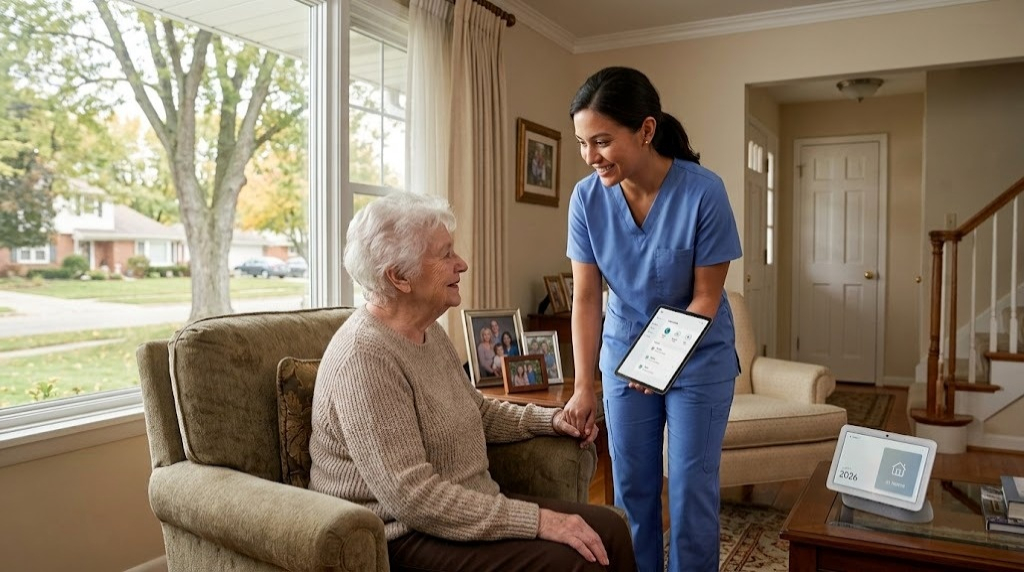
You notice unopened mail sitting on the kitchen counter. Maybe your mom seems less steady on her feet, or your dad is having a harder time keeping up with meals, laundry, or errands.
You want your parent to remain safe and independent in the home they love, but you’re also balancing work, family, and responsibilities of your own. Then comes another important question: How much will in-home care actually cost?
Understanding what drives home care pricing in Farmington Hills, MI — and what you’re actually paying for — can make the next decision feel much more manageable. This guide explains what affects the cost of non-medical home care, what services may be included, payment options worth exploring, and questions to ask before choosing a provider.
How Much Does Home Care Typically Cost in Farmington Hills, MI?
Non-medical home care is commonly billed by the hour, although pricing varies depending on the provider, schedule, and type of assistance needed.
There isn’t one rate that applies to every family. A senior who needs companionship and meal preparation for a few hours several days a week will have a different care plan from someone who needs personal care and support throughout most of the day.
That’s why the most useful number isn’t necessarily an advertised hourly rate — it’s the estimated cost of the care your loved one actually needs.
When you compare home care pricing in Farmington Hills, MI, ask providers about hourly rates, minimum visit requirements, evening or weekend rates, transportation charges, cancellation policies, and any other fees that may apply.
If you’re searching online for “in-home caregivers near me,” don’t compare providers on hourly price alone. Ask what is included, how caregivers are screened and supervised, what happens when your regular caregiver is unavailable, and how easily the schedule can change as your parent’s needs evolve.
At T.O.N.E. Home Care, we begin by learning about your loved one’s routines, preferences, safety concerns, and the type of assistance your family needs. From there, we can recommend an appropriate care schedule and explain the pricing associated with that plan.
What Factors Affect the Cost of In-Home Care?
Several factors can influence what your family ultimately pays.
Number of Care Hours: Some older adults need support only during certain parts of the day, while others require longer or more frequent visits. The number of scheduled hours directly affects your overall cost.
Time and Day of Care: Depending on the provider, evening, overnight, weekend, or holiday care may be priced differently from standard weekday care.
Level of Personal Assistance: Companionship, meal preparation, and light housekeeping are typically priced differently than hands-on assistance with bathing, dressing, toileting, or mobility, which calls for a more experienced level of caregiving.
Memory Care Support: Older adults living with Alzheimer’s disease or another form of dementia may need caregivers experienced in providing consistent routines, redirection, supervision, and compassionate memory support.
Transportation and Errands: If transportation to appointments, grocery stores, social activities, or errands is part of the care plan, ask whether additional mileage or transportation charges apply.
Understanding these factors makes it easier to compare providers and build a realistic monthly care budget.
Hourly Care, 24-Hour Care, and Live-In Care: What’s the Difference?
Families sometimes use “24-hour care” and “live-in care” interchangeably, but they are not necessarily the same service.
Hourly care generally means a caregiver visits for scheduled blocks of time. This works well for seniors who need assistance with specific routines, such as getting ready in the morning, preparing meals, bathing, running errands, or settling in for the evening.
24-hour care generally involves two or more caregivers working scheduled shifts so that a caregiver is always awake and available to provide support, day and night. This may be appropriate when an older adult requires ongoing supervision or frequent assistance at all hours.
Live-in care typically involves one caregiver residing in the home for multiple consecutive days, with a private bedroom and scheduled rest time built into the arrangement — though exact staffing and scheduling requirements can vary by provider.
Because arrangements vary, ask each provider exactly how these options work, what’s included, and how they’re priced.
What Does Non-Medical Home Care Include?
Non-medical home care helps older adults manage everyday activities so they can remain safe, comfortable, and as independent as possible at home.
Depending on the care plan, services may include:
- Companionship: Conversation, games, hobbies, walks, and activities that help older adults stay socially connected and engaged.
- Personal Care: Respectful, dignified assistance with bathing, grooming, dressing, toileting, and other everyday personal routines.
- Meal Preparation: Planning, preparing, and serving meals your loved one enjoys.
- Light Housekeeping: Laundry, dishes, tidying, and other light household tasks that keep the home comfortable and safe.
- Mobility Support: Steady, hands-on help with walking, standing, transferring, and getting around the home safely.
- Transportation and Errands: Safe rides to appointments, the grocery store, errands, and social activities, when included in the care plan.
- Medication Reminders: Gentle reminders to take medication as scheduled, provided within the caregiver’s permitted, non-medical scope.
- Memory Support: Companionship, familiar routines, supervision, and everyday assistance for individuals living with Alzheimer’s disease or other forms of dementia.
Non-medical home care does not replace skilled nursing, physical therapy, wound care, or other clinical services. Families should speak with their loved one’s physician or an appropriate home health provider when skilled medical care is needed.
How Can Michigan Families Manage the Cost of Home Care?
Home care is often privately paid, but some families may have additional resources available depending on their circumstances and eligibility.
Long-Term Care Insurance: Some policies provide benefits for qualifying in-home personal care services. Review your policy or contact the insurer to determine what is covered and what documentation is required.
Veterans Benefits: Eligible wartime veterans and surviving spouses may qualify for the VA’s Aid and Attendance or Housebound benefit, which can help offset the cost of home care. Because eligibility rules can change, confirm current requirements directly with the U.S. Department of Veterans Affairs or an accredited benefits representative.
Michigan’s MI Choice Waiver: Michigan’s MI Choice Waiver Program helps eligible older adults and adults with disabilities receive care at home instead of moving to a nursing facility. It is not an entitlement program, so eligibility and availability vary. Visit the State of Michigan’s MI Choice Waiver page or ask your local Area Agency on Aging for current details.
Employer Caregiving Benefits: Some employers offer backup care, caregiver-support programs, flexible scheduling, or care-navigation services.
Flexible Scheduling: If your loved one doesn’t need continuous care, focusing on the hours when help matters most can make care more manageable. Morning visits, for example, might help with bathing, dressing, and breakfast, while evening visits could focus on dinner and preparing safely for the night.
Agency Care vs. Hiring a Private Caregiver
Families searching for “private duty care near me” often wonder whether they should hire a caregiver directly or work with an established home care agency.
Hiring privately may appear less expensive initially, but depending on how the arrangement is structured, families may need to consider payroll and taxes, insurance, background screening, training, scheduling, supervision, and finding replacement care when the caregiver is unavailable.
An established agency typically manages many of these staffing and administrative responsibilities.
When comparing non-medical home care agencies in Farmington Hills, MI, ask how caregivers are screened, trained, supervised, and matched with clients. You should also understand how backup coverage works and whom you contact if there’s a problem.
The lowest hourly rate isn’t always the lowest overall burden — or the best fit for your family.
What Should You Ask Before Choosing a Home Care Agency?
Price matters, but it shouldn’t be the only consideration. Before choosing a provider, ask:
- Is there a minimum number of hours per visit or week?
- What exactly is included in the quoted rate?
- Are there additional weekend, holiday, transportation, or mileage charges?
- How are caregivers screened and trained?
- How do you match caregivers with clients?
- What happens if our regular caregiver is unavailable?
- Who supervises the caregiver?
- How easily can we change our care schedule?
- What is the cancellation policy?
- How will our family receive updates?
A reputable provider should welcome these questions and clearly explain its policies before you make a decision.
Getting a Personalized Home Care Quote in Farmington Hills
The most accurate way to understand your family’s cost is through a personalized assessment of your loved one’s needs.
At T.O.N.E. Home Care, this gives us the opportunity to learn about your parent’s daily routine, personal preferences, safety concerns, and the areas where additional support could make life easier.
We’ll talk through when help is most needed, which activities are becoming difficult, whether companionship or personal care is required, any mobility or home-safety concerns, and how much support the family is already providing.
This is also your chance to ask questions about scheduling and pricing before deciding how to move forward.
What Can a Typical Day of Home Care Look Like?
Imagine a cold Michigan winter morning, snow still fresh on the ground.
A T.O.N.E. caregiver arrives at your mom’s home, clears the front steps, and helps her start the day. They prepare a warm breakfast, gently remind her to take her morning medication, and chat about family photos while she gets ready.
Later, they fold a load of laundry, tidy the kitchen, enjoy a favorite hobby together, and make sure the walkways inside are clear and safe. You get a quick update on your phone, so you can focus on your day knowing Mom is safe, warm, and looked after.
That’s part of the value of home care that can’t always be captured by an hourly rate: real support for your parent, and greater peace of mind for your family.
Waiting too long to arrange support can lead to missed medications, caregiver exhaustion, or a fall on an icy step or cluttered walkway. Getting help early — even just a few carefully scheduled hours a week — can prevent a crisis and give your loved one time to grow comfortable with the extra support.
How Do We Get Started With Home Care?
Starting care doesn’t have to be complicated.
- Talk with a care coordinator. Discuss your loved one’s routine, concerns, and where your family needs support.
- Complete an in-home assessment. The care team learns about your parent’s needs, preferences, home environment, and daily routine.
- Develop the care plan. Together, you determine the type of support and schedule that makes sense.
- Begin care. A caregiver is matched according to your loved one’s needs, routines, and preferences.
Whether you’re comparing agencies, searching for “private duty care near me,” or simply wondering whether a few hours of weekly assistance would help, the first step is understanding what your loved one actually needs.
Frequently Asked Questions
Does Medicare Pay for Non-Medical Home Care? Original Medicare generally does not cover ongoing custodial or personal care when that’s the only care a person needs. It may cover skilled home health services under specific conditions — for example, when a doctor certifies that you’re homebound and need intermittent skilled nursing or therapy. See Medicare’s Home Health Services coverage page for current details. For ongoing non-medical assistance, families typically use private funds, long-term care insurance, or programs for which they may qualify.
Is There a Minimum Number of Hours Required for Home Care? Many home care agencies have minimum visit or scheduling requirements. These policies vary by provider, so ask about minimum hours and scheduling flexibility when requesting a quote. T.O.N.E. Home Care can walk you through its current scheduling requirements during your consultation.
Does Dementia Care Cost More? Pricing for dementia support can vary depending on the individual’s needs, required supervision, schedule, and level of assistance. During an assessment, your care coordinator will explain whether the level of memory support required affects the quoted rate.
Are Transportation or Mileage Costs Included? Policies vary between agencies. If your loved one needs transportation to appointments, errands, the grocery store, or social activities, ask whether mileage or other transportation charges apply before beginning care.
Does T.O.N.E. Home Care Serve West Bloomfield and Novi? Yes. T.O.N.E. Home Care serves families in Farmington Hills and surrounding Southeast Michigan communities, including West Bloomfield and Novi. Contact our team to confirm availability for your loved one’s location and requested schedule.
How Quickly Can Home Care Begin? Many families are able to begin care within just a few days of completing their in-home assessment, though exact timing depends on your loved one’s needs, requested schedule, and caregiver availability. Contact T.O.N.E. Home Care to discuss your situation.
Find the Right Home Care for Your Family
Asking for help can be an important step toward helping your parent remain safe, comfortable, and independent at home — while giving family caregivers the support they need, too.
You don’t have to decide everything at once. Start by understanding your loved one’s needs, the hours of care that would help most, and what those services will cost.
Contact T.O.N.E. Home Care today at +1 (248) 536-2915, or visit our contact page to speak with a care coordinator. If you’re not ready to call yet, download our free Fall Prevention checklist to make your parent’s home safer today.
T.O.N.E. Home Care, Inc. 33742 W 12 Mile Rd STE A1 Farmington Hills, MI 48331 Phone: +1 (248) 536-2915