

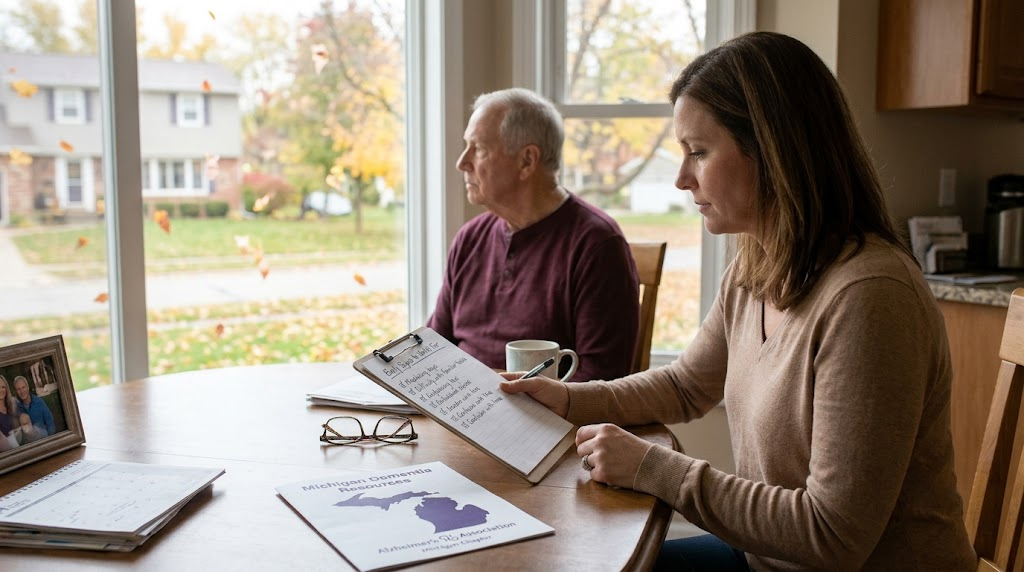
Maybe your mom has started repeating the same questions, or your dad recently got confused driving home from a familiar store. At first, these changes may seem like ordinary forgetfulness. But when they begin affecting everyday routines, it’s natural to wonder whether something more serious is happening.
For families across Farmington Hills, Oakland County, and Southeast Michigan, recognizing changes in memory, behavior, and daily functioning can be an important first step toward getting answers and finding the right support.
Not every memory lapse means dementia. Some changes are part of normal aging, while others may be related to medications, stress, sleep problems, or treatable medical conditions.
Understanding the early signs of dementia at home can help you recognize when it’s time to speak with a healthcare professional and explore ways to support your loved one’s safety, comfort, and independence.
What Are the 10 Early Warning Signs of Dementia?
Dementia can affect memory, communication, judgment, behavior, and the ability to manage familiar daily activities. These changes may develop gradually and can be easy to overlook at first.
Here are 10 common warning signs families may notice, consistent with signs recognized by national organizations such as the Alzheimer’s Association:
- Short-Term Memory Loss: Frequently repeating questions, forgetting recent conversations, or relying increasingly on reminders for familiar routines.
- Difficulty Planning or Solving Problems: Struggling to follow a familiar recipe, manage household bills, or complete tasks that previously came easily.
- Trouble Completing Familiar Activities: Becoming confused while using familiar appliances, preparing meals, or following everyday routines.
- Confusion About Time or Place: Losing track of dates, seasons, or locations, or becoming disoriented in familiar surroundings.
- Changes in Visual or Spatial Awareness: Difficulty judging distances, navigating spaces, or interpreting visual information.
- Difficulty Finding Words: Losing track of conversations, struggling to name familiar objects, or repeatedly using incorrect words.
- Misplacing Items in Unusual Places: Putting everyday objects in unexpected locations and being unable to retrace steps to find them.
- Changes in Judgment or Decision-Making: Making unusual financial decisions, becoming more vulnerable to scams, or showing reduced awareness of everyday safety concerns.
- Withdrawal From Social Activities: Losing interest in favorite hobbies, family gatherings, religious services, or regular activities with friends.
- Changes in Mood or Personality: Becoming unusually anxious, suspicious, fearful, irritable, or withdrawn.
Important: Experiencing one or more of these changes does not necessarily mean your loved one has dementia. However, new, persistent, or worsening symptoms deserve a medical evaluation.
Normal Aging vs. Mild Cognitive Impairment vs. Dementia
Forgetting where you placed your glasses or occasionally struggling to remember someone’s name can happen as we age.
The more important question is whether changes in memory or thinking are beginning to interfere with everyday life.
| Area | Normal Aging | Mild Cognitive Impairment (MCI) | Dementia |
| Memory | Occasionally forgetting names but remembering later | More frequent memory difficulties than expected for age | Memory problems may interfere with daily routines |
| Daily Tasks | Occasionally needing extra time for unfamiliar tasks | Difficulty with complex tasks, while largely maintaining independence | Increasing difficulty managing familiar activities |
| Orientation | Occasionally forgetting the day but remembering later | May experience some difficulty with orientation | May become confused about time or familiar places |
| Communication | Occasionally struggling to find a word | More noticeable word-finding difficulties | Communication difficulties may disrupt conversations |
| Judgment | Generally maintains everyday decision-making | May experience subtle changes in judgment | Changes may affect finances, safety, or daily decisions |
Mild cognitive impairment does not always progress to dementia. Some people remain stable, while others may improve depending on the underlying cause.
Dementia generally involves cognitive changes significant enough to interfere with independence and everyday functioning.
These comparisons are general guidelines, not diagnostic criteria. A healthcare professional can help determine what is causing the changes.
What to Look for Around Your Parent’s Home
Sometimes the earliest concerns become apparent through small changes in everyday routines.
When visiting your parent, pay attention to patterns rather than isolated incidents. A single forgotten appointment or untidy room may not mean much, but repeated changes can suggest that additional support or medical evaluation is needed.
1. Kitchen: Food and Cooking Safety
Take a look at the refrigerator, pantry, and cooking areas.
Are you noticing expired food, repeated purchases of the same groceries, or meals left unfinished?
Scorched pans, burned food, or appliances left running may suggest difficulty managing familiar cooking routines.
These changes can raise concerns about nutrition and kitchen safety, particularly when your parent lives alone.
2. Medications: Missed or Confusing Routines
Medication management can become more difficult when memory or organizational skills change.
You might notice:
- Pill organizers that remain full
- Missed doses
- Confusion about medication schedules
- Duplicate doses or uncertainty about whether medication was taken
Medication errors can have serious consequences. If you suspect missed or duplicate doses, contact your parent’s pharmacist or healthcare provider for guidance.
Non-medical caregivers may help with medication reminders within their permitted scope, but medication management and administration may require licensed healthcare professionals.
3. Mail and Household Bills
A growing pile of unopened mail, unpaid bills, or unfamiliar financial transactions may indicate difficulty managing responsibilities that were previously routine.
Rather than assuming your parent is being careless, approach the situation with curiosity and compassion.
Ask whether keeping track of bills or paperwork has become more difficult.
4. Driving and Navigation
Changes in driving can be particularly concerning.
Watch for unexplained dents, difficulty navigating familiar routes, confusion at intersections, or getting lost while driving to familiar destinations.
These changes can have several causes, including vision problems, medication effects, or cognitive changes.
If driving safety becomes a concern, speak with your parent’s healthcare provider about an appropriate evaluation. If there is an immediate safety risk, arrange alternative transportation rather than waiting for a routine appointment.
5. Bathing and Personal Care
Changes in grooming or hygiene may suggest that familiar routines are becoming difficult.
You may notice your parent wearing the same clothing repeatedly, bathing less frequently, or struggling with dressing.
These changes can also result from pain, depression, mobility limitations, or fear of falling.
The goal is not to judge their appearance, but to understand whether they need additional assistance.
6. Home Temperature and Everyday Safety
Notice whether your parent is having difficulty adjusting the thermostat, operating familiar appliances, or maintaining a comfortable home environment.
In Michigan, confusion about heating controls or unsafe use of space heaters can become particularly concerning during colder months.
Simple home-safety adjustments and appropriate supervision may help reduce some risks.
Behavioral Changes Families May Overlook
Not every early warning sign involves forgetting names or appointments.
Changes in personality, sleep, and social engagement may also be important.
For example, your parent may:
- Withdraw from regular social activities because conversations have become difficult.
- Become unusually suspicious, fearful, or frustrated.
- Experience changes in sleeping patterns, including nighttime wakefulness.
- Repeat stories or questions more frequently.
- Become upset when familiar routines change.
These behaviors may reflect confusion, anxiety, depression, medication effects, or other health concerns—not necessarily dementia.
Pay attention to whether the changes are new, recurring, or affecting everyday life.
Recognizing these patterns can help you have a more informed conversation with your parent’s healthcare provider.
How to Talk With a Parent About Memory Changes
Discussing memory concerns with a parent can be emotionally difficult.
They may worry about losing their independence or feel uncomfortable acknowledging that familiar activities have become harder.
A calm, respectful conversation can make it easier to work together.
Focus on what you’ve noticed, not on a diagnosis.
Instead of saying, “You’re becoming forgetful,” try:
“I’ve noticed that keeping up with bills seems more stressful lately. Would it help if we looked at them together?”
Use reassuring language.
Let your parent know that your goal is to support their independence, not take away their choices.
Offer specific help.
Rather than suggesting they need someone to take care of everything, ask whether assistance with meals, errands, or housekeeping would make their day easier.
Choose the right moment.
Have the conversation when everyone is rested and relaxed, rather than during a stressful situation.
Include a trusted healthcare professional.
Sometimes discussing concerns with a familiar physician can make the conversation feel less personal and more focused on health.
Most importantly, involve your parent in decisions whenever possible. Preserving their dignity and sense of control matters.
When Should You Call the Doctor About Memory Changes?
If you notice persistent changes in your parent’s memory, judgment, behavior, or ability to complete everyday tasks, schedule a medical evaluation.
Some conditions that resemble dementia may be treatable or manageable, including medication side effects, depression, vitamin deficiencies, thyroid disorders, and certain infections.
Sudden confusion or a rapid change in mental status requires urgent medical attention. It may indicate delirium or another acute medical condition rather than gradual dementia.
What to Bring to the Appointment
A little preparation can help the healthcare provider better understand your concerns.
A symptom log: Record specific examples, when they occurred, and whether the changes are becoming more frequent.
A medication list: Include prescriptions, over-the-counter medications, vitamins, and supplements.
Questions about daily functioning: Mention concerns involving driving, cooking, medication routines, finances, or personal safety.
Relevant medical history: Share any recent illnesses, falls, sleep changes, or changes in mood.
Early evaluation can help families understand what is happening and make informed decisions about appropriate care.
How Does In-Home Dementia Care Support Daily Life?
A diagnosis of dementia does not automatically mean your loved one must leave home.
Many people with early-stage dementia can continue living in familiar surroundings with appropriate support. However, the level of supervision and assistance needed depends on the individual’s symptoms, judgment, mobility, and safety risks.
For families exploring dementia care at home in Oakland County, MI, non-medical home care can help support familiar routines and everyday activities.
Depending on the care plan, services may include:
Consistent Companionship: Spending time with familiar caregivers who learn your parent’s interests, preferences, and daily habits.
Support With Daily Routines: Assistance with meals, dressing, bathing, grooming, and other everyday activities.
Gentle Redirection: Responding patiently to confusion and helping your loved one return to familiar, reassuring activities.
Meaningful Engagement: Encouraging hobbies, conversation, music, and activities appropriate to the person’s interests and abilities.
Home Safety Awareness: Helping maintain uncluttered living spaces and identifying concerns that should be shared with the family or care team.
Respite for Family Caregivers: Giving family members time to work, rest, or manage other responsibilities while their loved one receives assistance.
Familiar routines and consistent caregivers may help some individuals feel more comfortable and less distressed, although results vary from person to person.
Compassionate Memory Support From T.O.N.E. Home Care
At T.O.N.E. Home Care, we understand that memory-related changes affect the entire family.
Our caregivers provide personalized non-medical support that respects each person’s routines, preferences, and independence.
From companionship and meal preparation to personal care and familiar daily activities, our goal is to make everyday life more manageable while supporting family caregivers.
For families looking for memory care in Farmington Hills, MI, or Alzheimer’s home care in surrounding Michigan communities, we can help explore what level of everyday assistance may be appropriate.
When skilled nursing, therapy, or other medical services are needed, those needs should be addressed by appropriately licensed healthcare professionals. Our sister company, T.O.N.E. Home Health Services, provides that level of skilled, medical care and can coordinate closely with our non-medical caregiving team so your family receives the same compassionate support.
Michigan Resources for Families Facing Dementia
Families in Southeast Michigan have access to several organizations that provide information, education, and support.
Alzheimer’s Association – Michigan Chapter
Provides dementia education, caregiver resources, support groups, and a 24/7 helpline.
Website: https://www.alz.org/gmc
Area Agency on Aging 1-B (AgeWays Nonprofit Senior Services)
Provides information and assistance for older adults and caregivers across Oakland, Macomb, and several surrounding Southeast Michigan counties.
Website: https://www.ageways.org/
Michigan MI Choice Waiver Program
May help eligible older adults and adults with disabilities receive certain long-term services and supports in their homes or communities rather than institutional settings.
Eligibility and covered services depend on program requirements.
National Institute on Aging
Offers evidence-based educational resources about dementia, Alzheimer’s disease, caregiving, and brain health.
Website: https://www.nia.nih.gov/
These resources can help families better understand available support and make informed care decisions.
Frequently Asked Questions About Early Dementia and Home Care
1. What Is the Difference Between Normal Aging and Early Dementia?
Normal aging may involve occasional forgetfulness, such as temporarily forgetting a name or misplacing an item. Dementia involves changes in memory or other cognitive abilities that interfere with everyday functioning and independence. A medical evaluation is necessary to determine the cause of concerning symptoms.
2. Can Someone With Early-Stage Dementia Continue Living at Home?
Many people with early-stage dementia can remain at home with appropriate support. Whether this is safe depends on their symptoms, judgment, mobility, supervision needs, and home environment. An individualized care plan can help families determine what assistance and safety measures are needed.
3. When Should I Consider In-Home Care for a Parent With Memory Loss?
Consider additional support when changes in memory, judgment, or daily functioning begin affecting meals, hygiene, medication routines, household safety, or independence. A medical evaluation can help identify the cause, while an in-home care assessment can help determine what everyday assistance may be appropriate.
4. What Services Do In-Home Dementia Caregivers Provide?
Non-medical dementia caregivers may assist with companionship, personal care, meal preparation, light housekeeping, familiar daily routines, and medication reminders within their permitted scope. They can also provide respite for family caregivers. Services should be tailored to the individual’s needs and do not replace skilled medical care.
5. How Can Michigan Families Pay for In-Home Memory Care?
Families may use private funds, qualifying long-term care insurance, certain veterans benefits, or Michigan assistance programs such as the MI Choice Waiver. Coverage and eligibility vary, so families should confirm benefits and requirements with the relevant insurer or program.
Helping Your Loved One Stay Comfortable and Supported at Home
Noticing changes in a parent’s memory or behavior can bring uncertainty, but you don’t have to figure everything out on your own.
Start by paying attention to changes, discussing concerns with a healthcare professional, and exploring what support may help your loved one continue enjoying familiar routines and surroundings.
At T.O.N.E. Home Care, we’re here to help families across Farmington Hills, Oakland County, and Southeast Michigan navigate the everyday challenges of caring for an aging loved one.
Whether your parent needs companionship, help with personal care, or more consistent support with daily activities, our team can help you explore care options that respect their dignity and independence.
Contact T.O.N.E. Home Care today to speak with a dementia-trained care coordinator and schedule a personalized in-home care assessment.
T.O.N.E. Home Care, Inc. 33742 W 12 Mile Rd, Suite A1 Farmington Hills, MI 48331 Phone: (248) 536-2915Website: https://tonehomecare.com/