

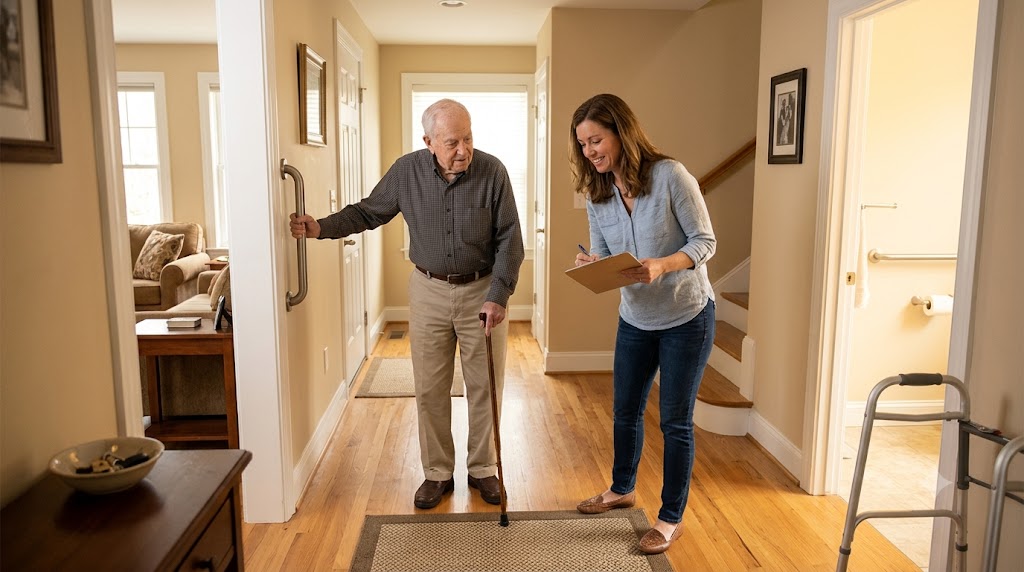
A loose rug in the hallway. A dimly lit staircase. A slippery bathroom floor. Small hazards around the home can become bigger concerns as a parent grows older.
Falls are common. According to the Centers for Disease Control and Prevention (CDC), more than one in four adults age 65 and older report falling each year, and falls are a leading cause of injury among older adults. The encouraging news is that many fall risks can be reduced.
If your mom or dad wants to continue living independently, there are practical steps you can take to make everyday spaces easier and safer to navigate.
For families across Farmington Hills, Oakland County, and Southeast Michigan, fall prevention at home is about more than removing obstacles. It also means recognizing changes in mobility, balance, vision, and daily routines that may increase the risk of falling.
This room-by-room checklist will help you identify common fall hazards, make thoughtful home adjustments, and recognize when additional support may be helpful.
8 Practical Ways to Reduce Fall Risks at Home
Quick Answer: Falls usually result from a combination of household hazards and personal health factors. These eight steps can help reduce common risks around the home.
- Remove loose throw rugs. Eliminate rugs that slide, curl, or create uneven walking surfaces. If a rug must stay, use a nonslip backing and make sure the edges lie flat.
- Install secure bathroom grab bars. Grab bars anchored into wall studs or proper blocking near the toilet and shower provide dependable support. Towel racks should never be used as grab bars.
- Improve lighting. Make sure stairways, hallways, bathrooms, and entrances are well lit, particularly at night.
- Keep walking paths clear. Remove shoes, boxes, pet toys, and other obstacles from commonly used pathways.
- Secure electrical cords. Route cords along walls and away from walking areas, and never run them across doorways or hallways.
- Improve bathroom traction. Use nonslip strips or mats inside tubs and showers, and avoid loose bath mats that slide or bunch up.
- Choose supportive footwear. Well-fitting shoes with nonslip soles generally provide better stability than loose slippers or socks.
- Check stairway handrails. Make sure handrails are sturdy, easy to grasp, and installed on both sides of the stairs where possible.
These changes are a good starting point, but home modifications alone cannot eliminate fall risks. Balance difficulties, medications, medical conditions, and mobility limitations also deserve attention.
Why Michigan Winters Create Additional Fall Hazards
Michigan winters bring challenges that can make everyday movement more difficult for older adults.
Across Metro Detroit, Farmington Hills, Birmingham, and surrounding Oakland County communities, ice, snow, shorter daylight hours, and wet entryways can introduce additional hazards.
Ice and Snow on Walkways
Porch steps, sidewalks, and driveways can become slippery, especially when melting snow refreezes overnight. Keep frequently used paths shoveled and treated with salt or sand.
Reduced Daylight
Early sunsets can make it harder to see obstacles around entrances, garages, and walkways. Motion-activated exterior lighting can help improve visibility.
Wet Entryways
Snow tracked indoors can leave tile or hardwood floors slippery. Use low-profile, rubber-backed entrance mats that lie flat and won’t create a tripping hazard.
Winter Clothing and Footwear
Bulky clothing may restrict movement, while wet boots or slippers with poor traction can affect stability. Encourage footwear that fits securely and grips well.
Reduced Physical Activity
Some older adults become less active during colder months. Over time, reduced movement can contribute to changes in strength and balance.
Indoor activity and exercises recommended by a healthcare professional can help maintain mobility during winter. Evidence-based balance programs such as A Matter of Balance have been offered locally through organizations like AgeWays; check with them for current class schedules.
Room-by-Room Home Safety Checklist for Older Adults
A home safety checklist for older adults can help families identify everyday hazards that might otherwise go unnoticed.
Walk through the house with your parent, focusing on the areas they use most often. Involve them in decisions about changes so the home remains comfortable and familiar.
1. Entryway and Porch Steps
The entrance is often where Michigan weather creates the greatest challenges.
- Keep steps and walkways clear. Remove snow, ice, wet leaves, and other slippery materials promptly.
- Check handrails. Make sure railings are secure and don’t wobble when grasped.
- Improve exterior lighting. Consider motion-activated lights near doors, steps, and walkways.
- Provide a place to sit. A sturdy chair or bench near the door makes putting on and removing boots easier.
- Manage wet floors. Use secure entrance mats and wipe up moisture promptly.
If your parent has difficulty navigating outdoor steps, ask a physical or occupational therapist whether additional modifications or mobility assistance would help.
2. Bathroom: Reduce Slips During Daily Routines
Bathrooms deserve particular attention because wet surfaces, limited space, and frequent changes in position can increase fall risks.
Understanding how to prevent falls in the bathroom begins with evaluating your loved one’s mobility and the way they use the space.
- Install grab bars properly. Secure grab bars near the shower, bathtub, and toilet, anchored into wall studs or blocking with the right mounting hardware.
- Consider a shower chair or transfer bench. The right equipment can make bathing easier for someone with limited endurance or balance.
- Improve floor traction. Use nonslip surfaces and avoid loose mats that slide or bunch up.
- Keep essentials within reach. Position soap, shampoo, and towels to minimize reaching, twisting, or bending.
- Review toilet height. Some older adults benefit from a properly fitted raised toilet seat or toilet safety frame.
Not every device is suitable for every person. A physical or occupational therapist can help determine which bathroom modifications fit your parent’s needs.
3. Stairways and Hallways
Stairs and hallways are used constantly, so it’s important to keep them clear and easy to navigate.
- Check handrails. Ensure railings are secure, easy to grip, and ideally installed on both sides.
- Keep stairs free of clutter. Never leave shoes, bags, or household items on steps.
- Light both ends. Make sure there’s a light switch or motion light at both the top and bottom of every staircase.
- Make step edges easier to see. Contrasting tape or paint on step edges can help, especially for someone with vision changes.
- Remove loose runners. Replace or secure rugs that curl, slide, or create uneven surfaces.
- Think about the basement. Many Michigan homes have laundry in the basement, which means regular trips on steep stairs while carrying a basket. Consider moving laundry upstairs, using a small rolling cart on the main floor, or arranging help with laundry.
If your parent has difficulty climbing stairs, avoid assuming that a new handrail alone will resolve the problem. A mobility evaluation can help identify additional support needs.
4. Bedroom: Make Getting Up and Moving Around Easier
Getting out of bed during the night can be challenging for someone with balance problems, muscle weakness, or dizziness.
- Clear the path to the bathroom. Remove clutter and loose rugs between the bed and bathroom.
- Keep lighting within reach. Place a bedside lamp or easy-to-use light control near the bed, and keep a flashlight handy in case the power goes out.
- Review bed height. Your parent should be able to sit on the edge of the bed with feet flat on the floor and get up comfortably.
- Rise slowly. Encourage your parent to sit on the edge of the bed for a moment before standing, which can help reduce dizziness.
- Keep essential items nearby. Position glasses, a phone, and other frequently used items within easy reach.
- Wear supportive footwear. Encourage sturdy slippers or shoes with nonslip soles when walking, especially on smooth floors.
A note about bed rails: Portable bed rails are not appropriate for everyone and can create serious entrapment or fall hazards. The U.S. Consumer Product Safety Commission has issued warnings about certain adult portable bed rails. If your parent struggles with bed mobility, ask a healthcare professional or occupational therapist about suitable equipment and safer transfer techniques.
5. Kitchen: Reduce Reaching, Slipping, and Tripping
The kitchen often involves standing, turning, reaching, and carrying items, all activities that can become more difficult when balance or strength changes.
- Store everyday items within easy reach. Keep commonly used dishes, cookware, and food between waist and shoulder height.
- Avoid unsafe climbing. Use a reacher or ask for help with high cabinets rather than standing on chairs or unstable stools.
- Clean spills promptly. Water, grease, and dropped food can create slippery surfaces.
- Keep floor mats secure. Avoid mats that slide, curl, or catch the wheels of a walker.
- Improve lighting. Make sure counters, sinks, and walking areas are well lit, including a small light for late-night trips for water.
If meal preparation is becoming difficult, assistance with cooking or household routines can help your parent continue enjoying familiar activities.
6. Lighting, Electrical Cords, and Walking Paths
Good visibility and clear pathways make movement throughout the home easier.
- Replace dim or burned-out bulbs with bright LED bulbs.
- Make sure hallways and frequently used rooms are well lit.
- Consider motion-activated nightlights along the route to the bathroom.
- Route electrical cords along baseboards and away from walking paths.
- Arrange furniture to allow comfortable movement.
- Make sure walkers or other mobility aids can pass through commonly used spaces.
Lighting should be bright enough to improve visibility without creating uncomfortable glare, particularly for individuals with certain vision conditions.
Want a printable version to take room by room? Download the CDC’s Check for Safety home fall-prevention checklist, or our Healthy Home Checklist for a broader look at home safety.
Fall Risks That Have Nothing to Do With the House
Removing home hazards is important, but falls often involve more than the physical environment.
A complete fall-prevention approach should also consider health, mobility, and medication-related factors.
Medication Side Effects
Some medications can contribute to dizziness, drowsiness, confusion, or changes in blood pressure. Ask a healthcare professional or pharmacist to review medications, especially if your parent takes several or experiences these symptoms.
Blood Pressure Changes
Feeling dizzy when standing up may be related to a drop in blood pressure. Persistent or recurring dizziness should be discussed with a healthcare professional.
Vision Problems
Changes in vision can make it harder to identify steps, obstacles, or uneven surfaces. Regular eye examinations and up-to-date glasses can help address certain risks.
Balance and Muscle Weakness
Reduced leg strength or balance can make walking and transferring more difficult. A physical therapist can evaluate mobility and recommend exercises or assistive devices.
Dehydration and Other Health Conditions
Dehydration and certain medical conditions can contribute to weakness or lightheadedness. Encourage regular fluids throughout the day, unless your parent’s doctor has recommended a fluid limit, and seek professional advice when symptoms persist.
Previous Falls
A history of falling is an important reason to seek further assessment. Even when a previous fall did not cause an obvious injury, it may indicate an underlying concern that deserves attention.
Fall prevention works best when families address both household hazards and personal health factors.
What Should You Do if an Older Adult Falls at Home?
Knowing what to do after an elderly parent falls can help you respond calmly and avoid making a possible injury worse.
First, Check for Immediate Danger
If your parent falls, check whether they are responsive, breathing normally, and able to communicate.
Do not rush to pull them up.
Ask where they feel pain and whether they hit their head. Look for obvious bleeding, unusual limb positioning, or signs of distress.
If a serious injury is possible, avoid moving them unless necessary to prevent immediate danger.
When Should You Call 911?
Call 911 immediately if your parent:
- Is unconscious or not breathing normally
- Has severe pain or a suspected head, neck, back, or hip injury
- Cannot safely move or bear weight
- Has significant bleeding
- Develops sudden confusion, weakness, or stroke-like symptoms
- Has a seizure or other signs of a medical emergency
A head injury deserves particular caution. If your parent takes blood-thinning medication and hits their head, urgent medical evaluation is important even if they initially appear well.
What if There Is No Obvious Injury?
Even when your parent says they feel fine, contact a healthcare professional for guidance after a fall.
Some injuries may not be immediately apparent, and the fall itself may indicate a change in balance, medication effects, or another health concern.
If your parent cannot get up safely, do not attempt an unsafe lift. Call for help instead.
A healthcare professional can also help determine whether a fall-risk assessment, physical therapy, medication review, or home modification would be beneficial.
Plan for Falls When No One Is Home
Many falls happen when an older adult is alone. If your parent lives alone or spends long stretches of the day by themselves, consider a medical alert device with a wearable button or automatic fall detection, and make sure a phone is always within reach. Regular check-in calls or scheduled caregiver visits can also help ensure someone notices quickly if something goes wrong.
How Can an In-Home Caregiver Help Reduce Everyday Fall Risks?
Home adjustments are an important first step, but some older adults also benefit from assistance with daily activities.
Depending on their needs and care plan, a trained non-medical caregiver can help support familiar routines, provide mobility assistance, and communicate concerns to family members.
Mobility and Transfer Assistance
Caregivers may assist with walking, getting in and out of chairs, or moving between familiar areas of the home, within their training and permitted scope.
Some individuals may require specialized transfer equipment or a skilled assessment before certain activities can be performed safely.
Bathing and Personal Care
Caregivers can assist with bathing, dressing, grooming, and other personal routines according to the individual’s needs and care plan.
This support can reduce the need for an older adult to manage difficult tasks alone.
Encouraging Movement and Companionship
Staying active matters for strength and balance, and it’s easier with company. A caregiver can join your parent for a daily walk, encourage exercises their healthcare provider has recommended, and offer conversation and connection along the way. Learn more about our companion care services.
Assistance With Daily Routines
Scheduled caregiving visits can provide support during times when your parent needs additional help, such as getting ready in the morning, preparing meals, or moving around the home.
Nighttime assistance may also be arranged when it’s part of the care plan.
Light Housekeeping
Keeping commonly used areas free of clutter, cleaning up spills, and maintaining clear walking paths can help reduce everyday trip hazards. See our light housekeeping services.
Medication Reminders and Communication
Within their permitted scope, non-medical caregivers may provide medication reminders and communicate concerns about missed doses, dizziness, or changes in routine to the family or healthcare provider.
They do not replace licensed professionals responsible for medication assessment or clinical management.
Compassionate In-Home Support From T.O.N.E. Home Care
At T.O.N.E. Home Care, we understand that helping an aging parent remain at home involves balancing safety, independence, and dignity.
Our caregivers provide personalized non-medical support, including companionship, personal care, mobility assistance within the care plan, and light housekeeping. Explore our full range of in-home care services.
For families looking for in-home senior care or mobility assistance in Oakland County, our team serves Farmington Hills, Bloomfield Hills, Birmingham, and surrounding Southeast Michigan communities.
We work with families to understand their loved one’s daily routines and identify where additional assistance may make everyday life more manageable. See how it works.
When mobility concerns require skilled physical therapy, occupational therapy, or other medical services, those needs should be addressed by licensed healthcare professionals. Our sister company, T.O.N.E. Home Health Services, provides skilled home health care and can coordinate with our non-medical caregiving team.
Frequently Asked Questions About Senior Fall Prevention
What Are the Most Common Risk Factors for Falls Among Older Adults?
Falls often involve a combination of factors, including muscle weakness, balance difficulties, medication side effects, vision changes, a history of previous falls, and household hazards such as clutter, poor lighting, and slippery surfaces. Addressing both personal health factors and environmental risks is important.
How Can I Make My Parent’s Bathroom Safer on a Budget?
Start by removing loose mats, improving lighting, keeping frequently used items within reach, and adding nonslip strips to the tub or shower. Grab bars, shower chairs, or a raised toilet seat may also help, but proper selection and installation are important. A physical or occupational therapist can recommend modifications based on your parent’s mobility needs.
What if My Parent Refuses to Remove Throw Rugs or Use a Walker?
Start with a respectful conversation about what matters most to them, such as remaining independent at home. Explain your concerns without criticizing their choices. Offer alternatives and involve them in decisions. A healthcare professional or physical therapist may also help explain which changes matter most.
Can Home Caregivers Prevent Falls?
No caregiver can guarantee that a fall will not happen. However, trained non-medical caregivers can help reduce certain everyday risks by assisting with personal care, mobility, daily routines, and light housekeeping. Medical or mobility-related concerns should be evaluated by qualified healthcare professionals.
How Does T.O.N.E. Home Care Help Families Address Fall Concerns?
T.O.N.E. Home Care works with families to understand their loved one’s daily routines, mobility needs, and areas where additional non-medical assistance may be helpful. Families can discuss concerns about personal care, walking, household hazards, and changing support needs during an initial care conversation or in-home assessment.
Where Is T.O.N.E. Home Care Located?
T.O.N.E. Home Care is located at 33742 W 12 Mile Rd, Suite A1, Farmington Hills, MI 48331. We serve families in Farmington Hills and surrounding Southeast Michigan communities. Call (248) 536-2915 to discuss available in-home care services.
Helping Your Loved One Stay Safer and More Independent at Home
A safer home doesn’t have to mean giving up the comfort and independence your parent values.
Sometimes, small changes like better lighting, clearer walkways, the right bathroom equipment, or a little extra help with daily routines can make everyday life easier to manage.
If you’re noticing changes in your parent’s balance, mobility, or ability to complete familiar activities, start by discussing those concerns with a healthcare professional. Then consider whether additional help at home could support their daily needs.
At T.O.N.E. Home Care, we’re here to help families across Farmington Hills, Oakland County, and Southeast Michigan explore compassionate, personalized in-home support.
Let’s start with a conversation about your loved one’s needs.
Call (248) 536-2915 or contact us online to discuss an in-home care assessment. Not ready to call yet? Download the Check for Safety home fall-prevention checklist and start with one room this week.
T.O.N.E. Home Care, Inc. 33742 W 12 Mile Rd, Suite A1 Farmington Hills, MI 48331 Phone: (248) 536-2915
Our goal is to help your loved one feel comfortable, supported, and respected in the place they call home.